
Wexis Biotech launches integrated sectioning workstation with built-in air treatment
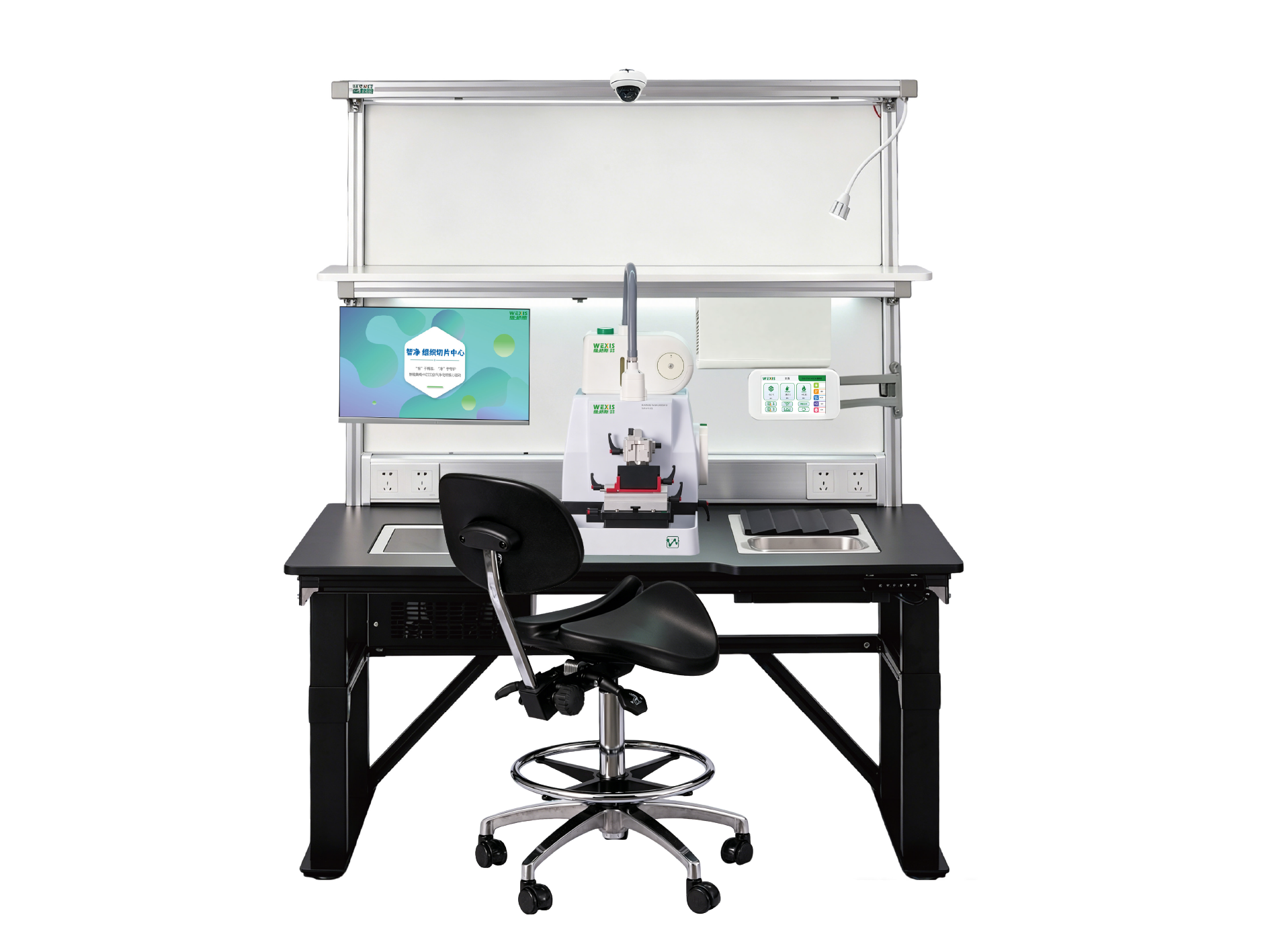
Guangzhou Wexis Biotech Limited has launched the Section Centre PLUS SC3111, an integrated workstation that brings several routine histopathology sectioning stages together on one working surface. The company says it is aimed at histopathologists, biomedical scientists, histology technicians and laboratory managers.
Modules and workflow
The SC3111 combines an adjustable-height working surface with dedicated modules for wax block cooling, microtome sectioning, section flotation and slide drying. The modules can be positioned on either the right or left side of the working surface. The benchtop is a 1500 × 800 mm chemical-resistant laminate, with working height adjustable from 700 to 1200 mm and three preset height levels. Wexis says the ergonomic configuration is intended to help reduce cervical and lumbar strain and occupational injuries associated with laboratory work.
A 7-inch colour touchscreen provides centralised control of functions including temperature and lighting, and allows real-time status monitoring.
Cooling, flotation and drying
- Cold plate: Peltier cooling with a set range of 0°C to 15°C and capacity for up to 43 wax blocks, positioned alongside the sectioning area. The product information also highlights condensed water recycling for cooling.
- Water bath: a detachable module measuring 250 × 150 × 70 mm, with PID temperature control and a set range of 40°C to 99°C.
- Slide drying: a 295 × 270 mm hotplate with a stated capacity of 48 slides and a temperature range of 40°C to 99°C.
Integrated NCCO air treatment
The workstation also incorporates an NCCO (Nano Confined Catalytic Oxidation) air treatment system, intended to help address organic pollutants such as formaldehyde within the local working environment. The system is designed to treat a range of chemical organic gases, including aldehydes, benzenes, phenols, alcohols, ammonia and total volatile organic compounds (TVOCs).
Wexis’ technical data sheet specifies a formaldehyde removal rate of at least 99% and a xylene removal rate of at least 99.5%. The accompanying product information describes NCCO as an alternative to conventional adsorptive filtration and states that its filter life is measured in years rather than months.
The system uses internal air circulation and is intended to provide local treatment within the workstation, rather than relying solely on wider laboratory ventilation infrastructure.
Electrical and general specifications
The workstation has a stated tabletop load capacity of 300 kg and is CE certified. Its maximum power rating is 1100 W, with an AC 220 V/50 Hz supply.
Guangzhou Wexis Biotech Limited, based in Guangzhou, China, develops laboratory equipment and solutions for pathology and histopathology applications.
- For more information, visit: https://wexis.cn/en/Section-Centre.html